





Hey there, fellow digital enthusiasts! Ready to dive into the world of voice search optimization? Well, buckle up because we’re about to embark on a journey that’ll transform the way you think about your website’s SEO strategy.
In this day and age, where Alexa, Siri, and Google Assistant have become our virtual besties, it’s high time we gave voice search the attention it deserves. So, let’s roll up our sleeves and get cracking on preparing your website for those oh-so-trendy conversational queries!
Voice Search Optimization: Preparing Your Website for Conversational Queries
Alright, folks, let’s kick things off with the meat and potatoes of our discussion. Voice search optimization isn’t just a fancy buzzword; it’s the future of how people interact with the internet. But what exactly does it entail?
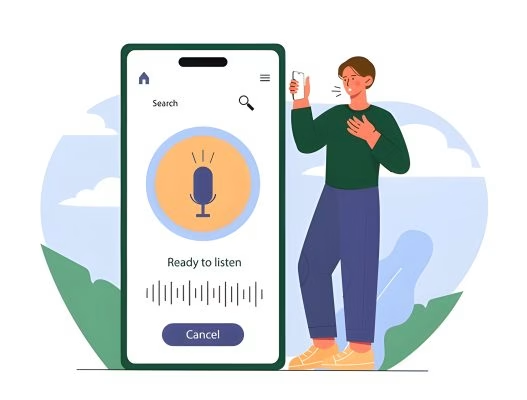
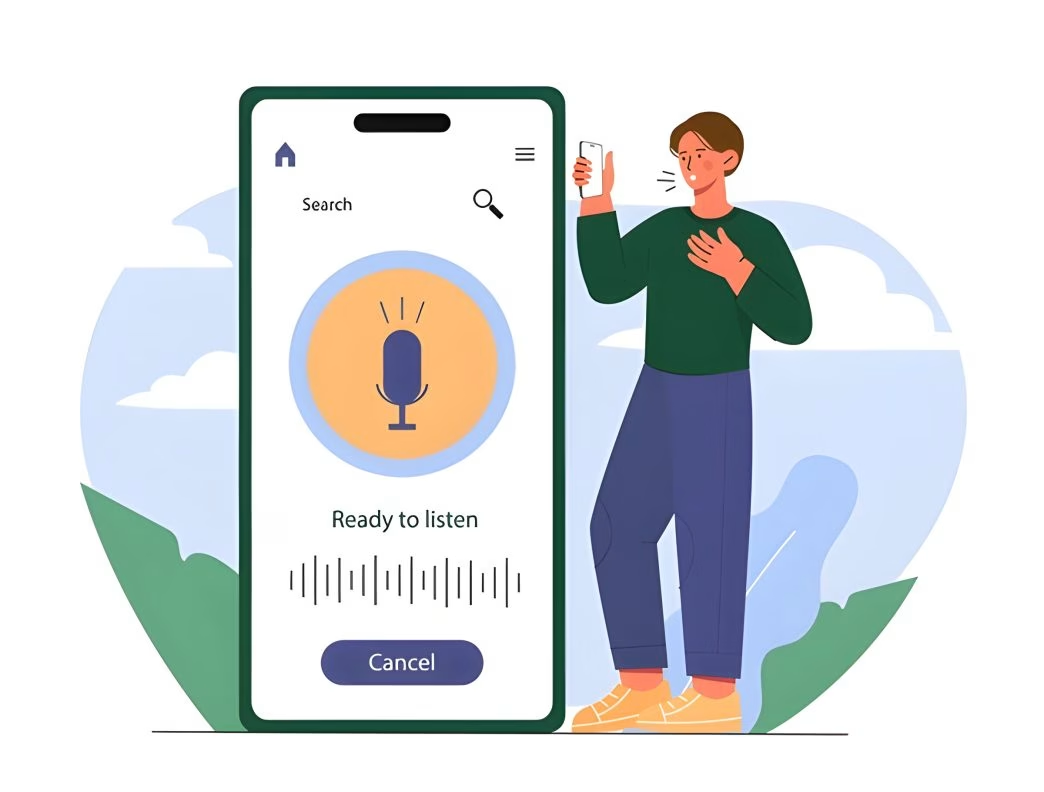
Well, in a nutshell, it’s all about making your website play nice with voice-activated devices and understanding the nuances of how people speak, rather than how they type. Think about it – when you’re asking Siri for the nearest pizza joint, you’re not going to say, “pizza restaurant vicinity.” Nope, you’re more likely to ask, “Hey Siri, where’s the closest pizza place?” That’s the kind of natural language we need to cater to. So, how do we do that? Let’s break it down, shall we?
Understanding the Voice Search Landscape
Before we dive into the nitty-gritty, it’s crucial to grasp the current state of voice search. Voice-activated devices are no longer just a cool gadget; they’ve become an integral part of our daily lives.
From smart speakers to smartphones, these devices are changing the way we seek information. Did you know that by 2024, it’s estimated that the number of digital voice assistants will reach 8.4 billion units – a number higher than the world’s population? That’s right, folks, we’re talking about a voice-first future!
The Psychology Behind Voice Queries
Now, let’s get into the heads of our voice-searching friends. When people use voice search, they tend to:
- Use longer, more conversational phrases
- Ask direct questions
- Seek immediate, concise answers
Understanding this psychology is key to optimizing your content for voice search. It’s not just about keywords anymore; it’s about context and intent.
Optimizing Your Content for Voice Search
Alright, now that we’ve got the basics down, let’s roll up our sleeves and get to the good stuff. How exactly do we optimize our content for those chatty searchers out there?
Focus on Long-Tail Keywords
Gone are the days of stuffing your content with short, choppy keywords. Voice searchers are all about those long-tail, conversational phrases. Instead of targeting “best restaurants,” think “What are the best restaurants near me open now?”
Embrace Question-Based Content
Remember those curious kids who always asked “why” about everything? Channel that energy into your content. Create FAQ pages, use question-based headers, and provide clear, concise answers. Google loves to serve up featured snippets for voice queries, so aim for that coveted position zero!
Optimize for Local Search
“Hey Google, where’s the nearest coffee shop?” Sound familiar? Local searches are the bread and butter of voice queries. Make sure your Google My Business listing is up to date, include your address and phone number on your website, and create content that caters to “near me” searches.
Technical Aspects of Voice Search Optimization
Now, don’t worry, we’re not going to get too techy on you, but there are a few behind-the-scenes tweaks that can make a world of difference.
Speed Up Your Website
Voice searchers are an impatient bunch. They want answers, and they want them now! Ensure your website loads faster than a New York minute. Compress images, leverage browser caching, and maybe consider a content delivery network (CDN) if you’re feeling fancy.
Mobile-First Indexing
Here’s a shocker – most voice searches happen on mobile devices. gasp I know, right? Make sure your website is mobile-friendly. If it’s not, you might as well be invisible to voice searchers.
Implement Schema Markup
Schema what now? Don’t worry, it’s not as complicated as it sounds. Schema markup is essentially a way to tell search engines what your content means, not just what it says. It’s like giving Google a cheat sheet for your website.
Creating Conversational Content
Alright, time to channel your inner Shakespeare (or maybe your inner talk show host is more appropriate here).
Write Like You Talk
Ditch the formal tone and write like you’re having a chat with your best bud. Use contractions, throw in some colloquialisms, and don’t be afraid to let your personality shine through.
Use Natural Language Processing (NLP)
NLP is all about making your content sound more human. Tools like Grammarly can help you fine-tune your writing to sound more natural and conversational.
Tell Stories
Humans are hardwired for storytelling. Weave narratives into your content to make it more engaging and memorable. After all, who doesn’t love a good yarn?
Voice Search and Featured Snippets
Ah, the holy grail of voice search – featured snippets. These little boxes of information at the top of search results are often what voice assistants read out in response to queries.
Structure Your Content for Snippets
Want to increase your chances of landing a featured snippet? Structure your content with clear headers, use bullet points or numbered lists, and provide concise answers to common questions.
Target “People Also Ask” Questions
You know those “People Also Ask” boxes in Google search results? They’re gold mines for voice search optimization. Address these questions in your content to boost your chances of being the go-to answer for voice queries.
Voice Search Optimization for E-commerce
Calling all online shop owners! Voice search isn’t just for information seekers; it’s becoming increasingly popular for shopping too.
Optimize Product Descriptions
Make your product descriptions conversational and include natural language that people might use when asking about a product.
Create How-To Content
“Hey Alexa, how do I set up my new coffee maker?” Create content that answers these types of questions to draw in voice searchers and potential customers.
Measuring Voice Search Performance
Now, I know what you’re thinking – “This all sounds great, but how do I know if it’s working?” Fair question, my friend.
Use Google Search Console
While there’s no specific “voice search” metric (yet), you can look at the increase in long-tail keyword traffic and question-based queries.
Monitor Featured Snippet Performance
Keep an eye on your featured snippet appearances. More snippets often mean more voice search visibility.
The Future of Voice Search
Alright, time to dust off that crystal ball and peer into the future of voice search.
Integration with Smart Home Devices
As our homes get smarter, voice search will become even more integrated into our daily lives. Think beyond phones and speakers – we’re talking fridges, mirrors, and maybe even your toaster!
Multilingual Voice Search
The world is a big place, and voice search is going global. Preparing for multilingual voice queries could give you a significant edge in the international market.
Common Voice Search Optimization Mistakes
Let’s take a moment to learn from the oopsies of others, shall we?
Ignoring Long-Tail Keywords
Don’t get stuck in the short-tail keyword rut. Embrace those longer, conversational phrases!
Neglecting Mobile Optimization
I’ll say it louder for the people in the back – MOBILE IS KING in the voice search world!
Forgetting About Local SEO
Remember, a huge chunk of voice searches are local. Don’t miss out on that “near me” action.
Voice Search Optimization: Preparing Your Website for Conversational Queries
Alright, let’s bring it all home with a deep dive into the heart of our topic. Voice search optimization isn’t just about tweaking a few keywords here and there. It’s a fundamental shift in how we approach SEO and content creation.
When we talk about preparing your website for conversational queries, we’re really talking about making your entire online presence more human.
It’s about understanding the intent behind the words, the context of the search, and the immediate needs of the user. Think about it – when someone uses voice search, they’re often in the middle of something else.
They might be cooking, driving, or trying to wrangle a toddler. They need quick, accurate information without having to scroll through pages of results. So, how do we cater to these multitasking maestros? Here are a few key strategies:
- Answer the “Who, What, When, Where, Why, and How”: Structure your content to directly answer these common question starters. For example, if you’re a local bakery, you might have content that answers “How fresh are your pastries?” or “When do you open on Sundays?”
- Use Conversational Language: Write your content as if you’re answering someone face-to-face. This doesn’t mean being unprofessional, but rather being approachable and easy to understand.
- Focus on Featured Snippets: These concise answer boxes are voice search gold. Structure your content with clear, direct answers to common questions in your niche.
- Optimize for “Near Me” Searches: If you have a physical location, make sure your Google My Business listing is up-to-date and that your website clearly states your address, hours, and contact information.
- Create Content for Every Stage of the Customer Journey: From awareness to decision-making, have content that addresses user needs at each stage. This increases the chances of your website being the go-to resource for voice searchers.
Remember, voice search optimization isn’t a one-and-done deal. It’s an ongoing process of listening to your audience, understanding their needs, and continually refining your approach. But hey, that’s what makes it exciting, right?
Conclusion
Whew! We’ve covered a lot of ground, haven’t we? From understanding the psychology behind voice searches to tweaking our content and technical SEO, we’ve explored the ins and outs of voice search optimization.
Remember, folks, voice search isn’t just a trend – it’s the future of how we interact with the digital world. By preparing your website for conversational queries now, you’re not just keeping up with the times; you’re staying ahead of the curve.
So, go forth and optimize! Make your content more conversational, focus on those long-tail keywords, and always keep your user’s intent in mind. Who knows? The next time someone asks their smart speaker a question, it might just be your website providing the answer. Now, if you’ll excuse me, I need to go ask Alexa where I left my car keys…

Author